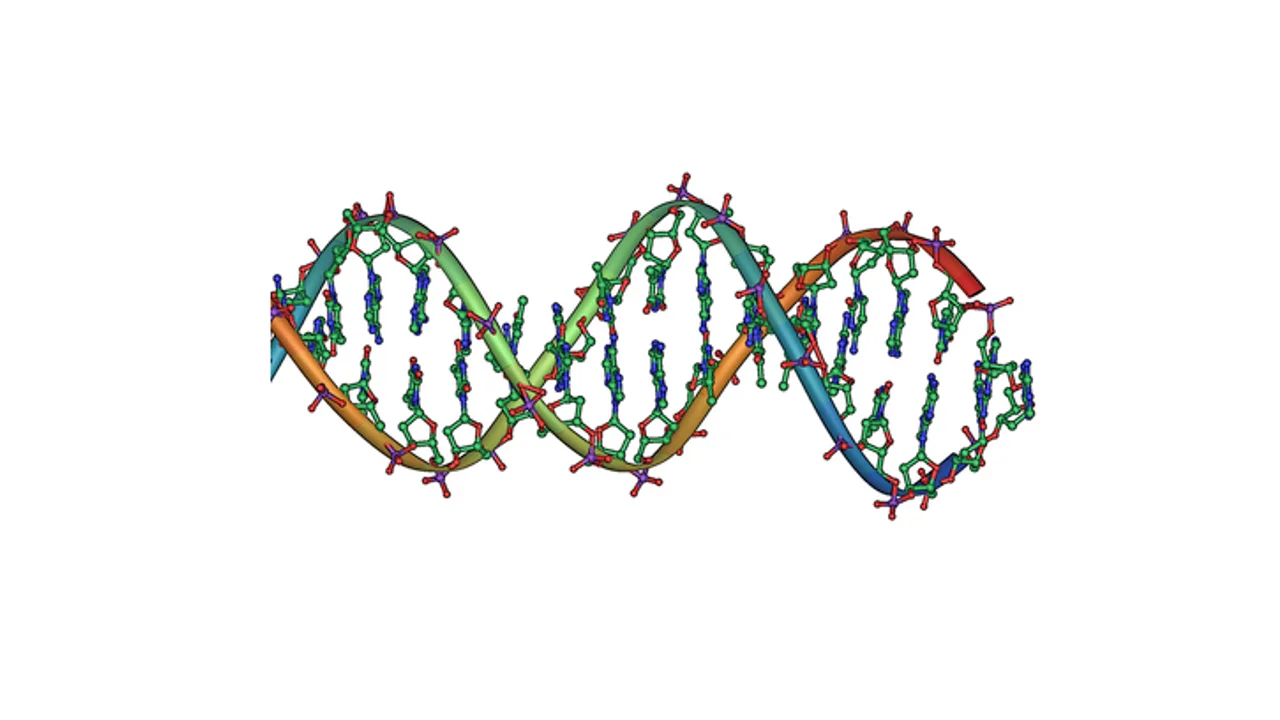
Google DeepMind introduced AlphaGenome Atlas on September 8, 2026, and included it in its October 2 research roundup. The resource precomputes predicted effects for nine billion possible single-letter changes in the human genome. DeepMind describes a roughly one-petabyte dataset available through a portal for academic research.
The distinction between a prediction and an observation is essential. The atlas does not mean researchers experimentally measured all nine billion changes, and its molecular predictions should not be read as a personal diagnosis.
A catalog can change which experiments come first
DeepMind describes an AlphaGenome Variant Impact score that combines predictions across coding and non-coding regions. The aim is to help researchers prioritize variants for further investigation. The release includes research examples, but those examples do not establish that every high-scoring variant causes a disease or explains a particular person’s condition.
A researcher should identify what the score represents and which evidence supports the next inference. A predicted regulatory effect, a statistical association and a clinically established finding answer different questions. Combining them requires an explicit method rather than assuming that one score settles the whole interpretation.
Related sources: Google AlphaGenome Atlas announcement ↗ · DeepMind technical account of AlphaGenome Atlas ↗
Scale does not remove the need for validation
A large catalog can make hypothesis generation faster, but a hypothesis still needs a test. Preserve the selected variant, the prediction version and the biological context. Choose an experiment that can distinguish the proposed mechanism from reasonable alternatives.
Consider where the model may be less informative, including contexts that are poorly represented in its underlying evidence. A result that looks strong in one tissue or assay may not carry the same meaning elsewhere. The limitations should guide the experiment rather than disappear when the dataset becomes convenient to query.
What Canadian research teams can evaluate
A laboratory can compare its existing prioritization process with a workflow that uses the atlas. Measure whether the tool surfaces useful candidates, misses known relevant cases or changes the amount of expert review required. The valuable outcome is a better research decision, not simply a larger list of variants.
Patient-related interpretation belongs with qualified clinical and genetics professionals using the applicable evidence and procedures. For research, AlphaGenome Atlas is a substantial new resource to inspect and validate. Its promise is more targeted experiments, while the experimental and clinical conclusions still need their own support.
Sources and editorial method
We use the linked original statements and reports to distinguish documented facts from our analysis. Company announcements describe their authors’ plans and claims; they are not independent verification of future outcomes. This article is dated and will be revised if material evidence changes. Read our editorial standards and corrections process.
- Google AlphaGenome Atlas announcement ↗ — September 8, 2026; dataset scale, portal and impact-score description.
- DeepMind technical account of AlphaGenome Atlas ↗ — Primary explanation and research-paper link; predicted molecular effects require interpretation and validation.