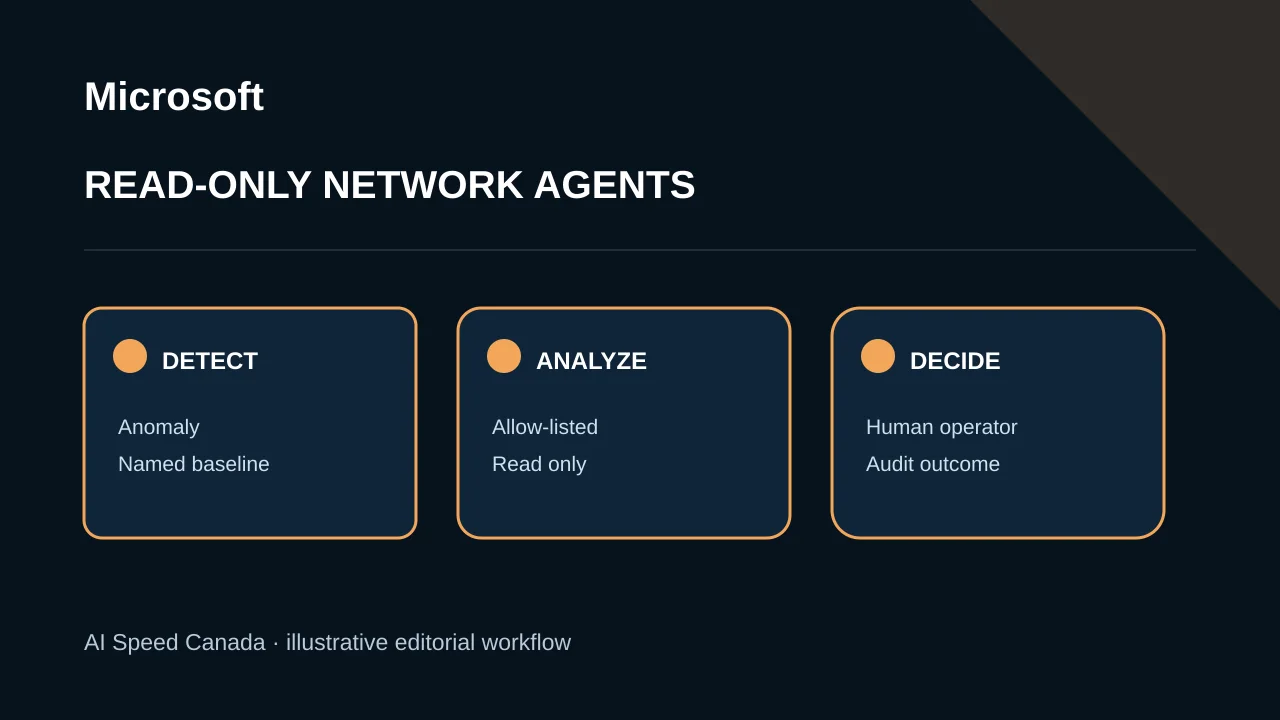
Microsoft reported on November 11, 2026 that South Korean telecommunications provider KT has used its AIO-Net agent platform since August to help operators investigate network alarms. The system combines multiple large language models in Microsoft Foundry with KT procedures and feedback from experienced network staff. KT’s published timing results are customer and vendor claims, not an independent benchmark, and the system is not authorized to change network equipment.
Agents continuously inspect anomalies and document their reasoning path
Microsoft says AIO-Net analyzes real-time equipment data every minute, queries approved sources and produces a diagnosis and supporting report. KT’s experienced operators helped define procedures, and feedback from use is fed into a continuous improvement process. The platform currently covers 70 units of critical equipment, with plans to expand to 280 and later into access networks.
Those figures describe current scope and a plan, not completed network-wide deployment. Canadian carriers evaluating a similar approach should start with a bounded equipment class and preserve a baseline of human-only investigations, false alarms, missed incidents and time to safe resolution.
Related sources: Microsoft Source: KT Meisters and Microsoft engineers build AIO-Net ↗
KT reports faster detection and investigation
According to KT, detecting a network issue now takes two to three minutes rather than more than ten, while an agent investigation and report averages five minutes—about half the previous manual time. Microsoft also says the service supports 29 million mobile subscribers, which gives context for KT’s operating scale but does not show how many subscribers were affected by the evaluated incidents.
The useful distinction is between detection speed, diagnostic accuracy and customer impact. A quicker wrong conclusion can increase risk. Evaluators should publish the incident sample, severity mix, measurement window and accuracy criteria before treating timing numbers as transferable to another network.
Related sources: Microsoft Source: KT Meisters and Microsoft engineers build AIO-Net ↗
Read-only authority is enforced in the application
AIO-Net can flag an incident, inspect equipment using allow-listed read-only commands and suggest a response. KT says it cannot execute a remediation command, and that restriction is enforced by the application rather than only by instructions in a prompt. Operators decide what action to take.
That is a meaningful separation-of-duties control, but it still requires testing. Teams should attempt unauthorized commands, validate the allow list, audit every tool call and design safe behaviour when data is missing or contradictory. For Canadian network operators, privacy and security reviews should cover telemetry access, supplier boundaries and retention. The announced expansion should be judged by independently defined reliability outcomes, not the number of devices connected.
Sources and editorial method
We use the linked original statements and reports to distinguish documented facts from our analysis. Company announcements describe their authors’ plans and claims; they are not independent verification of future outcomes. This article is dated and will be revised if material evidence changes. Read our editorial standards and corrections process.
- Microsoft Source: KT Meisters and Microsoft engineers build AIO-Net ↗ — Microsoft’s November 11, 2026 customer feature; architecture, reported timings, read-only controls, human authority and expansion plan.