OpenAI announced on November 10, 2026 that OpenAI Academy is running an AI Skills Jam for Caregivers & Community Health with the Caregiver Action Network, Alzheimer’s Association and American Diabetes Association. The free, in-person workshops are scheduled in Oakland, Tampa, Pittsburgh, Atlanta and Detroit. That geographic detail matters for Canadian readers: the announcement is a U.S. training initiative, not a Canadian program or a general release of a new health product.
The curriculum focuses on organization and navigation
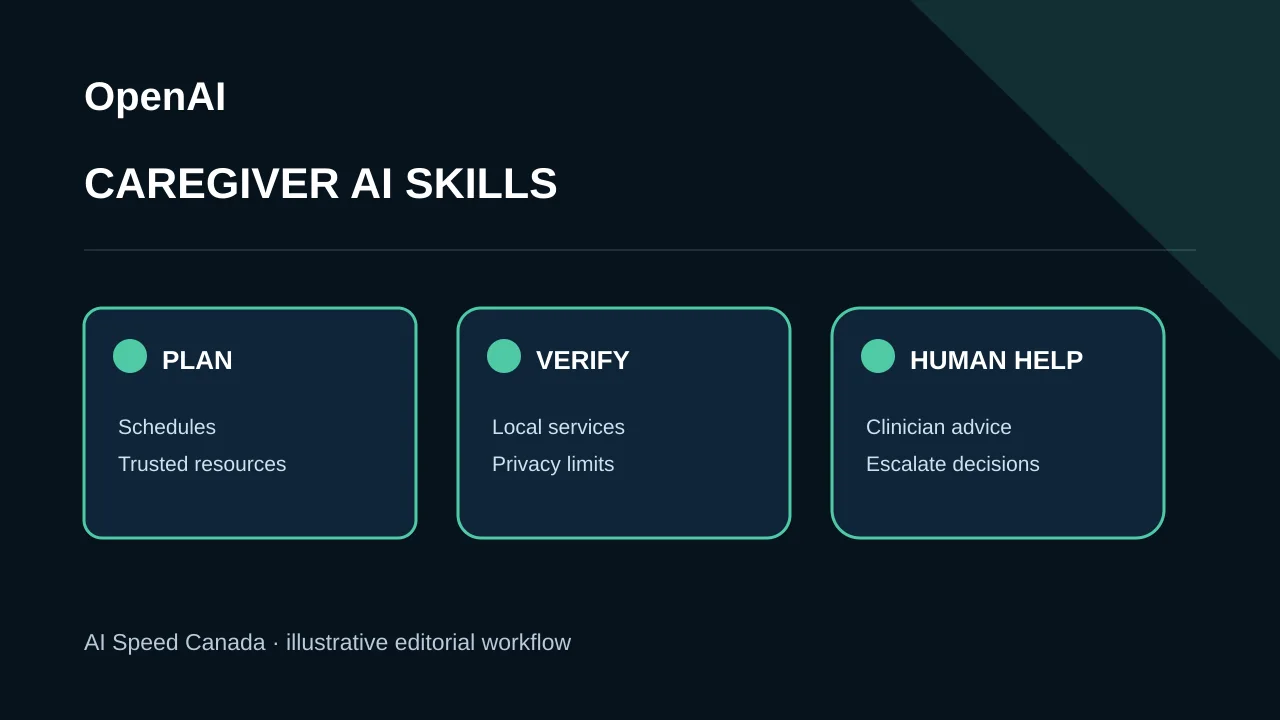
OpenAI says participants will practise organizing schedules and checklists, turning trusted educational resources into plain language, finding community resources and preparing support-group discussion guides. Those are administrative and communication tasks. The event description does not say ChatGPT will diagnose illness, select treatment or replace a clinician.
The company also says no coding background is required and that facilitators and mentors will provide hands-on support. An in-person workshop can help participants ask questions, but the announcement does not provide attendance numbers, completion measures or an evaluation design. It therefore establishes the program and its intended curriculum, not its effectiveness.
Related sources: OpenAI: Helping caregivers use AI in everyday life ↗
A usage estimate is not an outcome study
OpenAI cites a privacy-preserving estimate that more than 40 million weekly U.S. ChatGPT messages about healthcare during October 9–29 asked about care for somebody else. The figure describes message activity in a stated period. It does not show how many unique caregivers were involved, whether answers were accurate or whether anyone’s workload or health improved.
The workshops may reveal useful questions for later resources, but participant enthusiasm would still be different from verified benefit. A credible follow-up would report who attended, what skills were assessed, how privacy knowledge changed and whether users could identify situations requiring professional help.
Related sources: OpenAI: Helping caregivers use AI in everyday life ↗
Canadian caregivers need local sources and privacy boundaries
Canadian participants cannot assume a U.S. resource finder or health explanation applies across provinces. Benefits, referral pathways, privacy rules and emergency contacts vary. Users should begin with provincial health services, regulated professionals and established caregiver organizations, then use AI only to organize or explain material they can verify.
Avoid entering names, diagnoses, medication lists, financial details or other identifying information unless the service, consent and retention terms are appropriate. A checklist generated by AI can support a conversation; it should not become an unreviewed care plan. The practical lesson is to pair AI literacy with source literacy and a clear escalation path.
Sources and editorial method
We use the linked original statements and reports to distinguish documented facts from our analysis. Company announcements describe their authors’ plans and claims; they are not independent verification of future outcomes. This article is dated and will be revised if material evidence changes. Read our editorial standards and corrections process.
- OpenAI: Helping caregivers use AI in everyday life ↗ — Official November 10, 2026 program announcement; cities, partners, curriculum, safeguards and usage estimate.