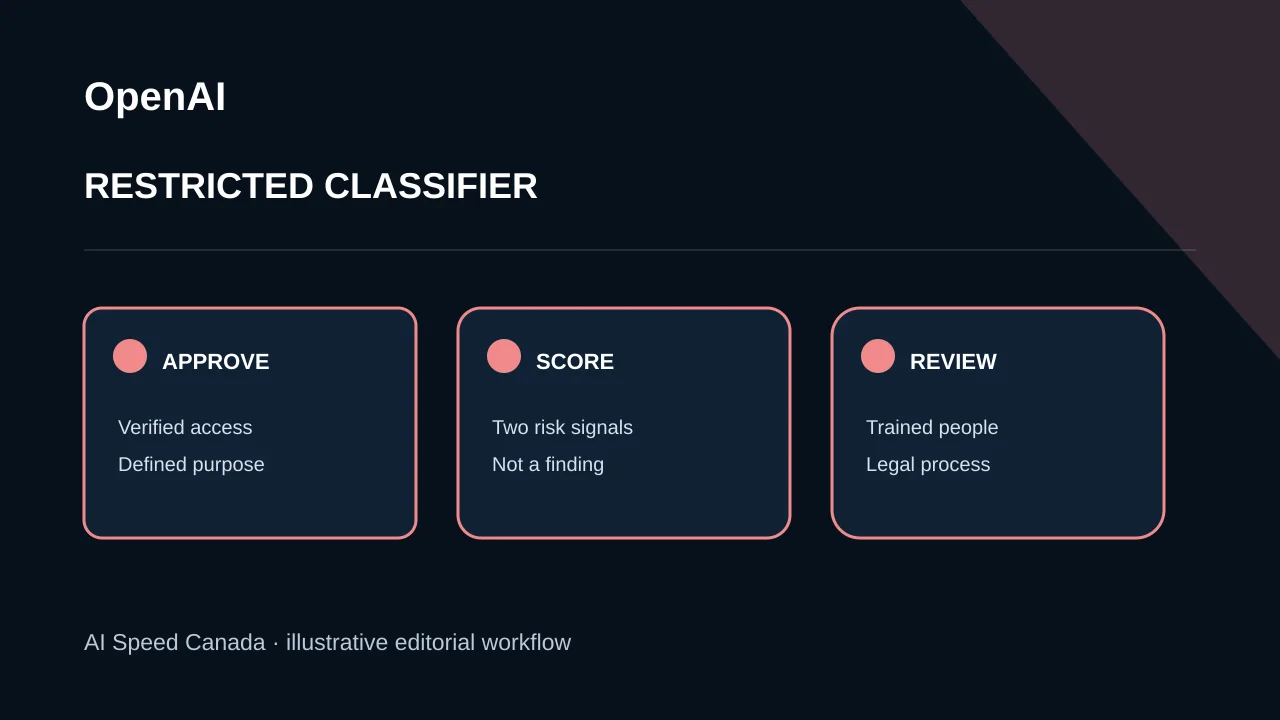
OpenAI added its CSAM Image Classifier to official model release notes on November 16, 2026. Approved organizations can use the API without a model charge to obtain separate signals for potential child sexual abuse material and potential AI-generated CSAM. Access requires an application, verification, onboarding and acceptance of program terms.
Scores prioritize review; they do not make the decision
OpenAI says the classifier is intended to help trained reviewers prioritize images. It explicitly does not replace human judgment. The organization using it remains responsible for reviewing results, deciding what action to take and meeting any reporting obligations.
A score is not proof of illegality, identity, age or intent. False positives can expose lawful sensitive material to unnecessary review, while false negatives can miss harm. Operational thresholds therefore need documented validation, escalation and appeal procedures.
Related sources: OpenAI: Model release notes — CSAM Image Classifier ↗
No-cost access is still restricted access
The release is not a public, anonymous moderation endpoint. Applicants must be approved and complete program onboarding. Organizations should verify who may submit material, where processing occurs, what metadata is retained and how reviewer access is logged before sending any sensitive content.
Canadian organizations need qualified legal and safeguarding guidance for applicable federal, provincial and international duties. The availability of an API does not define lawful possession, transfer, retention or reporting. Avoid duplicating or moving suspected material outside an authorized evidence-handling process.
Related sources: OpenAI: Requesting access to the CSAM Image Classifier ↗
A safe workflow needs more than a model threshold
Use least-privilege service accounts, encrypted transport, strict retention, separated reviewer roles and audit trails. Test the classifier on properly governed evaluation data, monitor subgroup and source effects, and keep emergency procedures for reviewer wellbeing and suspected imminent harm.
Measure review precision, recall where ethically possible, time to escalation and overturned decisions. Report classifier version and threshold with any evaluation. The release establishes an available restricted tool; it does not establish independent accuracy, eliminate human exposure or guarantee compliance.
Sources and editorial method
We use the linked original statements and reports to distinguish documented facts from our analysis. Company announcements describe their authors’ plans and claims; they are not independent verification of future outcomes. This article is dated and will be revised if material evidence changes. Read our editorial standards and corrections process.
- OpenAI: Requesting access to the CSAM Image Classifier ↗ — Official access guidance; no-cost approved use, application, verification, onboarding and terms.
- OpenAI: Model release notes — CSAM Image Classifier ↗ — Official November 16, 2026 release; purpose, separate signals and human-review responsibility.