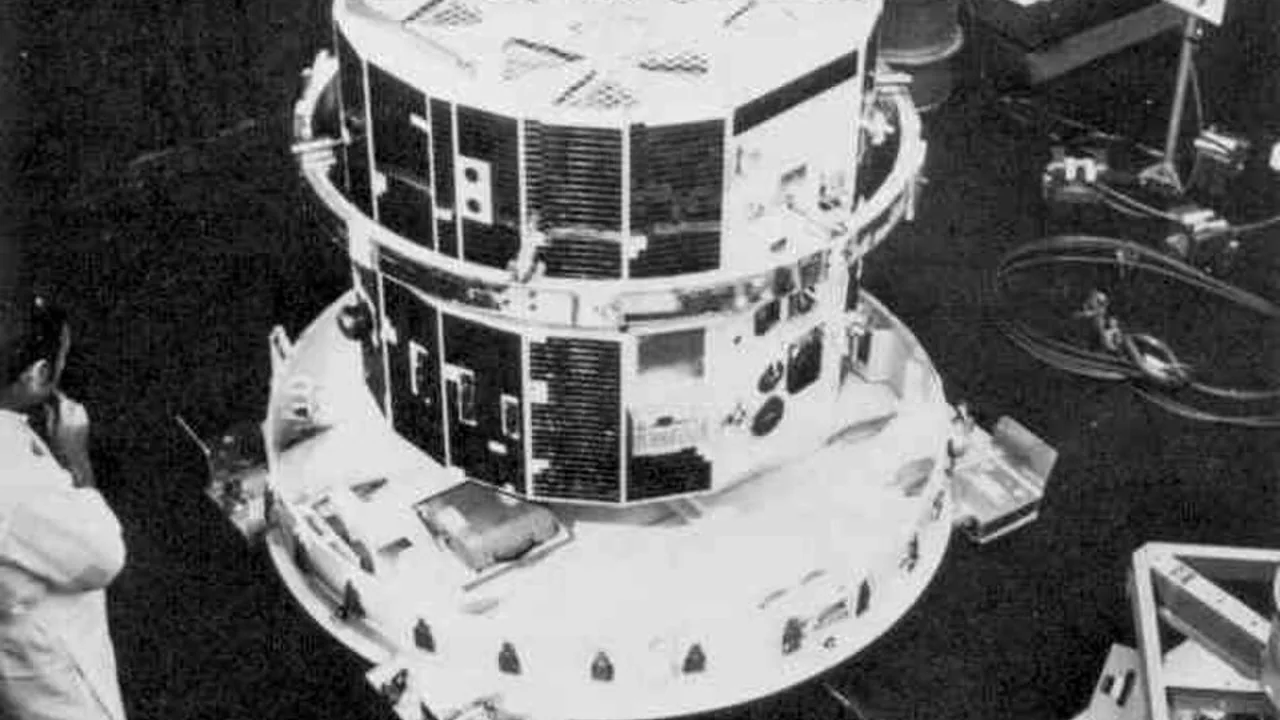
Satellogic announced on October 2, 2026 that Merlin.01 and three NewSat satellites launched the previous day aboard a SpaceX Falcon 9. The company reported contact with its ground stations and healthy subsystem reports. Merlin.01 is the first satellite in a constellation designed for wide-area change detection using onboard AI.
The operational distinction matters: the satellite is in its early-orbit phase, with payload testing and commissioning expected after that phase in mid-October. Satellogic targets full operational capacity in the second half of 2027. A successful launch does not yet demonstrate daily global remapping or the planned alert service.
What the spacecraft is designed to do
The company describes a ten-band payload, one-metre-class imagery and onboard processing intended to identify changes and cue higher-resolution follow-up by NewSat satellites. It also describes alerts within 30 minutes as a design goal. Those specifications and timelines are company statements, rather than measurements independently reproduced by AI Speed.
For a potential customer, request the evidence that connects an orbital capability with a usable alert: commissioning status, areas observed, revisit frequency, delivery reliability and the definition of a detected change. A fast alert can still be unhelpful if it identifies the wrong event or arrives without enough context for a reviewer.
Related sources: Satellogic Merlin launch release ↗
Canadian applications require local validation
Wide-area imagery could be relevant to Canadian researchers or infrastructure operators evaluating changes across large regions. That is a possible use case, not evidence of a signed Canadian contract or tested service. Buyers should evaluate scenes representing the actual landscape and conditions their project must monitor.
Specify what should count as a change before running a trial. Compare the alerts with independently reviewed imagery and known events, including cases with no relevant change. Track both misses and false alarms. A demonstration selected by a supplier will not show how a system behaves across the ordinary, uneventful observations that dominate daily operations.
Watch commissioning before making promises
The next meaningful milestone is verified payload performance after commissioning, followed by evidence of repeatable delivery. Keep a record of which services depend on future spacecraft, inter-satellite links or processing components. A contract should distinguish capacity available now from functions that remain conditional on a broader rollout.
For public communication, separate a satellite photograph, an AI-processed map and a confirmed event on the ground. Each has a different evidentiary role. The Merlin launch is a concrete step toward Satellogic’s proposed monitoring architecture; whether it becomes a dependable operational service will require evidence beyond the launch announcement.
Sources and editorial method
We use the linked original statements and reports to distinguish documented facts from our analysis. Company announcements describe their authors’ plans and claims; they are not independent verification of future outcomes. This article is dated and will be revised if material evidence changes. Read our editorial standards and corrections process.
- Satellogic Merlin launch release ↗ — Primary company release, October 2, 2026; launch, ground contact, commissioning schedule and forward-looking capabilities.