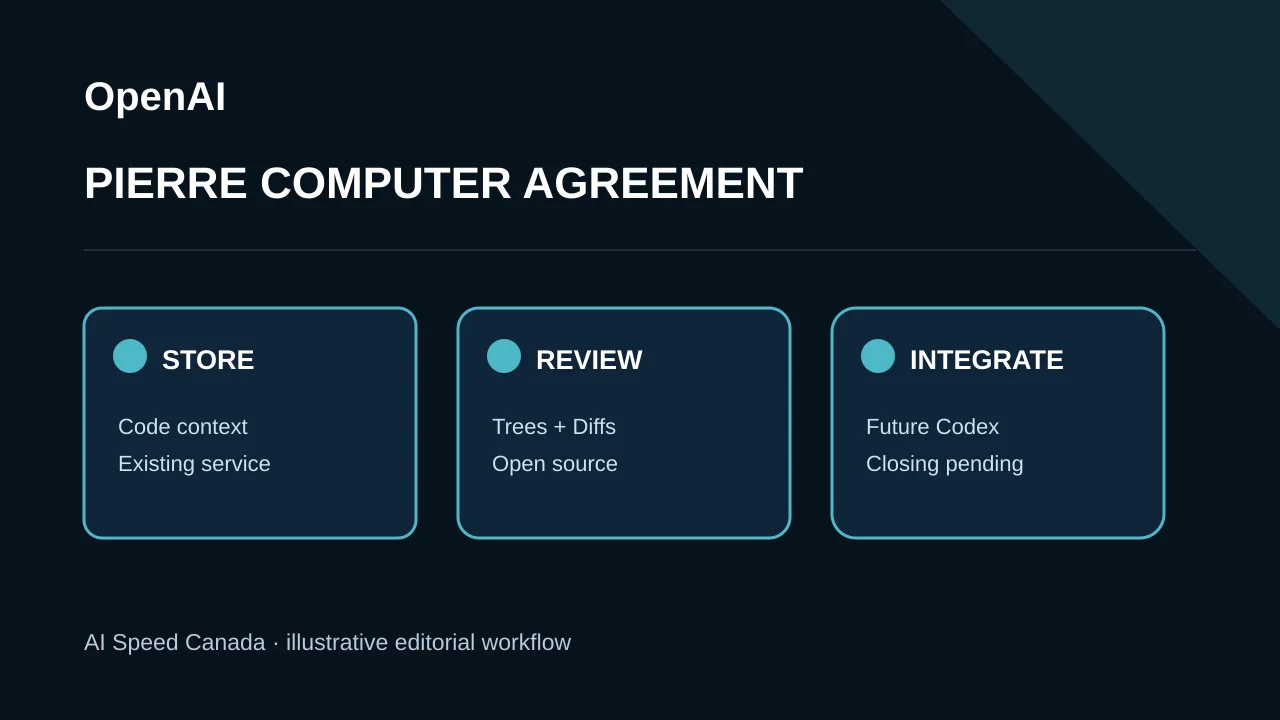
OpenAI announced on November 4, 2026 that it has agreed to acquire Pierre Computer Company. Pierre develops Code Storage and the open-source Trees, Diffs and Highlights libraries used to present and inspect code. OpenAI says Codex already uses Trees and Diffs. The acquisition is subject to customary closing conditions and regulatory approvals, so it should be described as an agreement rather than a completed transaction.
Pierre built infrastructure for storing and reviewing code
Code Storage is a service for programmatically storing and accessing repositories. Trees, Diffs and Highlights address the interface layer around repository browsing, change comparison and syntax presentation. These components are relevant to coding agents because generated changes still need clear, reviewable context.
OpenAI says existing Code Storage customers will continue to be supported after closing. That is a stated continuity plan, not a permanent service guarantee. Customers should retain exports, understand authentication and data-handling terms, and monitor product notices as the transaction progresses.
Related sources: OpenAI: OpenAI to acquire Pierre Computer Company ↗
Current use and future integration are different facts
The announcement says Codex currently uses Pierre’s Trees and Diffs libraries. That is a present product relationship. OpenAI also says Pierre will help build future Codex infrastructure; the scope, dates and customer-facing changes are not specified.
Avoid treating the acquisition as evidence of faster coding, fewer defects or a newly launched feature. The strategic rationale is clearer code infrastructure and review experiences. Performance and reliability claims will need dated releases and measured evaluations after integration work occurs.
Related sources: OpenAI: OpenAI to acquire Pierre Computer Company ↗
OpenAI says the libraries will remain open source
The company states that Pierre’s open-source projects will remain open source. Users should still track the actual repository licences, maintainers, releases and governance after closing. A public commitment and a licence file answer related but different questions.
Teams depending on the libraries should pin versions, keep a tested update path and preserve the ability to replace a component. Open source can reduce lock-in, but a project’s health also depends on review quality, response times and a sustainable contributor community.
Related sources: OpenAI: OpenAI to acquire Pierre Computer Company ↗
Canadian customers should review code residency and exit options
Repository infrastructure can contain proprietary code, secrets and personal information in commit history. Canadian organizations should map where Code Storage data is processed, who can access it, how deletion and export work, and whether transaction-related changes affect contracts or subprocessors.
The safest near-term action is monitoring, not migration based on a headline. Confirm whether the service or library you use is affected, preserve backups and test portability. If future Codex integration changes a workflow, evaluate review time, defect escape rate and permissions before expanding adoption.
Sources and editorial method
We use the linked original statements and reports to distinguish documented facts from our analysis. Company announcements describe their authors’ plans and claims; they are not independent verification of future outcomes. This article is dated and will be revised if material evidence changes. Read our editorial standards and corrections process.
- OpenAI: OpenAI to acquire Pierre Computer Company ↗ — Official November 4, 2026 announcement; transaction status, Pierre products, current Codex use, customer continuity and open-source commitment.